Middle East tensions interrupt business confidence recovery – report





The Business Confidence Index (BCI) published by financial services firm RMB and economic research organisation the Bureau for Economic Research (BER) fell by eight points to 39 in the second quarter, reversing the gains recorded over the previous two quarters and leaving the index just below its long-term average of 40.
The index indicates that, while the recovery in business sentiment has lost momentum, confidence remains well above the recent low of 27 reached in the second quarter of 2023.
The survey used to compile the index took place from May 14 to 25. During this period, the operating environment for firms deteriorated meaningfully compared with the first-quarter survey – conducted before the US/Iran war – as tensions in the Middle East escalated, driving oil and fuel prices higher.
This also contributed to a marked shift in the domestic interest rate outlook towards hikes.
Whereas markets had previously expected further monetary policy easing, including about three 25 basis-point cuts, attention has since shifted to the possibility of between two and four rate hikes of 25 basis points each.
Indeed, the policy rate was raised by 25 basis points after the survey period.
RMB and the BER say the decline in the BCI is, therefore, not unexpected.
The report authors explain that this change in the macroeconomic backdrop weighed on sentiment across most sectors, with four of the five sectors that make up the headline index having recorded lower confidence in the second quarter.
The largest decline was among new-vehicle dealers, where confidence fell by 18 points to 49, followed by wholesalers, with confidence down ten points to 40.
Retail confidence declined by five points to 31, while building contractor confidence fell by four points to 46. Manufacturing was the only sector to record an improvement, albeit marginally, rising by one point to 31.
RMB and the BER explain that the deterioration in confidence was broad-based, but not uniform.
The survey results show that the sharpest pullback came from sectors most exposed to shifts in household spending, financing conditions and fuel costs.
New-vehicle dealers remained the most confident sector despite the sharp decline in sentiment from the elevated level reached in the first quarter. The decline was accompanied by weaker sales volumes, suggesting that the earlier rapid momentum in vehicle demand has started to fade.
Wholesaler confidence declined materially, falling to 40 in the second quarter. The survey explains that business conditions deteriorated, though they remained slightly better than they were this time last year.
Consumer goods sales volumes declined sharply.
In line with underperforming consumer-facing wholesalers, retailers remained subdued, with confidence falling further to 31 after a decline to 36 last quarter.
Retail sales volumes weakened sharply, particularly in semi-durable and durable goods, suggesting a more cautious consumer cutting back on discretionary spending.
Additionally, building contractor confidence eased to 46, following the strong improvement recorded in the first quarter. While the decline was relatively contained, activity weakened, with both residential and non-residential building activity under renewed pressure.
Manufacturing confidence was the exception, edging up to 31. However, the level remains low and consistent with ongoing demand weakness, the index says.
Moreover, domestic sales were unchanged at a weak level, although some export-related indicators improved. The survey indicates that a surge in production costs has left the sector facing a challenging operating environment.
Provincially, the deterioration was concentrated in Gauteng and KwaZulu-Natal with declines of 15 points to 26 and 17 points to 40, respectively.
By contrast, confidence in the Western Cape increased by five points to 55, making it the only major province to record an improvement.
“The decline in business confidence during the second quarter is disappointing, particularly after the encouraging improvement recorded over the preceding two quarters.
“However, the setback is not unexpected given the sudden deterioration in the global environment, even though there was no material weakening in South Africa's domestic fundamentals,” says RMB chief economist Isaah Mhlanga.
He explains that the sharp escalation of tensions in the Middle East pushed oil prices higher, lifted local fuel costs and significantly altered interest-rate expectations.
He says businesses have had to adjust quickly to a less supportive outlook, which weighed on sentiment across most sectors.
“While firms continue to grapple with familiar domestic challenges, there is little evidence that these issues deteriorated further. Instead, many respondents indicated that uncertainty had increased and that clients had become more cautious about spending and investment decisions.”
Importantly, confidence remains broadly in line with its long-term average and above the lows recorded in recent years.
“While the external shock has interrupted the recovery in sentiment, it has not necessarily derailed it,” says Mhlanga.
“Much will depend on whether geopolitical tensions ease and whether domestic reform momentum can continue to support growth and investment.”
The second-quarter survey suggests that businesses have become more cautious rather than outright pessimistic.
It indicates that firms appear to be reassessing the outlook in response to a more uncertain global environment and the prospect of higher inflation and interest rates.
RMB and the BER posit that the renewed improvement in confidence will depend on some easing in geopolitical tensions, a stabilisation in oil and fuel prices, and greater certainty about the interest-rate path.
They argue that continued progress on structural reforms, alongside improvements in logistics, infrastructure and local government performance, will be critical in ensuring that the current setback proves temporary rather than persistent.
INTEREST RATES
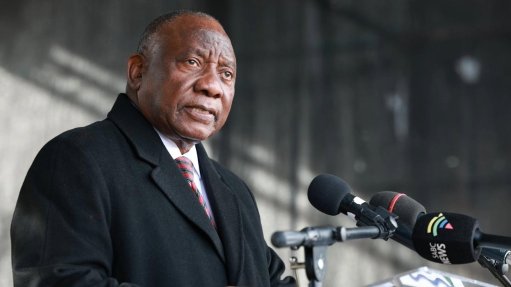
Meanwhile, South African Reserve Bank (SARB) governor Lesetja Kganyago provided insights into South Africa’s monetary policy stance and outlook at this year’s BER conference, held on June 2.
Against a backdrop of global volatility, persistent uncertainty and the energy price shock, Kganyago explained that the Monetary Policy Committee (MPC) decided to lift rates from 6.75% to 7% last week.
“Of course, we hope the current conflict will end sooner rather than later, and that it will be less disruptive than the 1979 oil shock. But hope is not a strategy. There is a danger that expectations will move up faster now because the memory of higher inflation is fresh,” he said.
“In these circumstances, the lesson of history is clear: central banks need to safeguard their credibility, and in safeguarding their credibility, it is important that they keep a grip on expectations.
“We should have realistic plans for moving back to our targets again – not just explain why we keep missing. This is the context for our recent decision to raise rates,” he continued.
He added that the SARB also considered the size of the oil shock and the spillovers to food prices from higher diesel and fertiliser costs, which are creating second-round effects, when making its decision to increase rates.
Kganyago said core inflation is projected to be about 4% in the first half of next year, within the relevant horizon for monetary policy.
“By changing rates, we hope to send a clear and credible signal that we will keep inflation under control. This is intended to keep expectations contained. We have already made good progress getting expectations down and we want to sustain that.”
He noted that the SARB’s rate setting also has more mechanical effects.
Firstly, he explained, higher rates support the exchange rate, resulting in more favourable import prices. He described the exchange rate channel as an important part of monetary policy transmission.
There is also a demand-side angle, Kganyago continued.
“As firms embark on price changes, they will have to see if the market can stomach increases. If businesses raise prices because of higher fuel costs, then they should expect to lose customers,” he said.
He explained that this is economically necessary as it aligns demand with supply.
“However, if firms are raising prices because they figure demand is strong enough that they can get away with it, our job is to block that. We do this by taking away excess demand with higher rates.”
Kganyago noted that, even with the Middle East crisis, South Africa is in a better place now with the lower target than it was before.
“Our baseline is that we will have inflation of 4.4% this year, reverting to 3% by 2028. This is less inflation than we would have had under the old 4.5% objective.”
He explained that the country has also largely retained gains it saw last year, such as borrowing costs.
Kganyago assured that the SARB will be getting inflation back down to 3%.
“I hope our history of delivering on our targets makes that promise convincing. Last week’s rate hike should help too. I cannot tell you now if more will be needed, or how much.
“We take our decisions meeting by meeting. But the policy objective should be crystal clear. We are committed to low and stable inflation,” he said.
Article Enquiry
Email Article
Save Article
Feedback
To advertise email advertising@creamermedia.co.za or click here
Research Reports

Projects

Latest News
Showroom
AxFlow AQS Liquid Transfer (Pty) Ltd is an Importer and Distributor of Pumps in Southern Africa
VISIT SHOWROOM
Established in 1933, EKATO is the world leader in agitation technology, supplying agitators for processes and applications such as chemicals and...
VISIT SHOWROOM
Press Office
Announcements
What's On
Subscribe to improve your user experience...
Option 1 (equivalent of R125 a month):
Receive a weekly copy of Creamer Media's Engineering News & Mining Weekly magazine
(print copy for those in South Africa and e-magazine for those outside of South Africa)
Receive daily email newsletters
Access to full search results
Access archive of magazine back copies
Access to Projects in Progress
Access to ONE Research Report of your choice in PDF format
Option 2 (equivalent of R375 a month):
All benefits from Option 1
PLUS
Access to Creamer Media's Research Channel Africa for ALL Research Reports, in PDF format, on various industrial and mining sectors
including Electricity; Water; Energy Transition; Hydrogen; Roads, Rail and Ports; Coal; Gold; Platinum; Battery Metals; etc.
Already a subscriber?
Forgotten your password?
Receive weekly copy of Creamer Media's Engineering News & Mining Weekly magazine (print copy for those in South Africa and e-magazine for those outside of South Africa)
➕
Recieve daily email newsletters
➕
Access to full search results
➕
Access archive of magazine back copies
➕
Access to Projects in Progress
➕
Access to ONE Research Report of your choice in PDF format
RESEARCH CHANNEL AFRICA
R4500 (equivalent of R375 a month)
SUBSCRIBEAll benefits from Option 1
➕
Access to Creamer Media's Research Channel Africa for ALL Research Reports on various industrial and mining sectors, in PDF format, including on:
Electricity
➕
Water
➕
Energy Transition
➕
Hydrogen
➕
Roads, Rail and Ports
➕
Coal
➕
Gold
➕
Platinum
➕
Battery Metals
➕
etc.
Receive all benefits from Option 1 or Option 2 delivered to numerous people at your company
➕
Multiple User names and Passwords for simultaneous log-ins
➕
Intranet integration access to all in your organisation